
1
Guided brief
The agent collects the study objective, respondent audience, market context, topic area, required survey length, output requirements and constraints before it starts drafting.
A specialist consultancy working with medical-device companies was spending serious expert time on repeat survey drafting. The baseline was clear: about four hours of creation and formatting effort, roughly $1,000 costed for one survey, and a 12-person research team already facilitating up to 200 survey projects a year. After the Copilot workflow, a guided brief could produce a structured first draft in around two to three minutes. That is roughly a 99% reduction in drafting time before expert review, with capacity to support more than 200 surveys a year without adding specialists in lockstep.
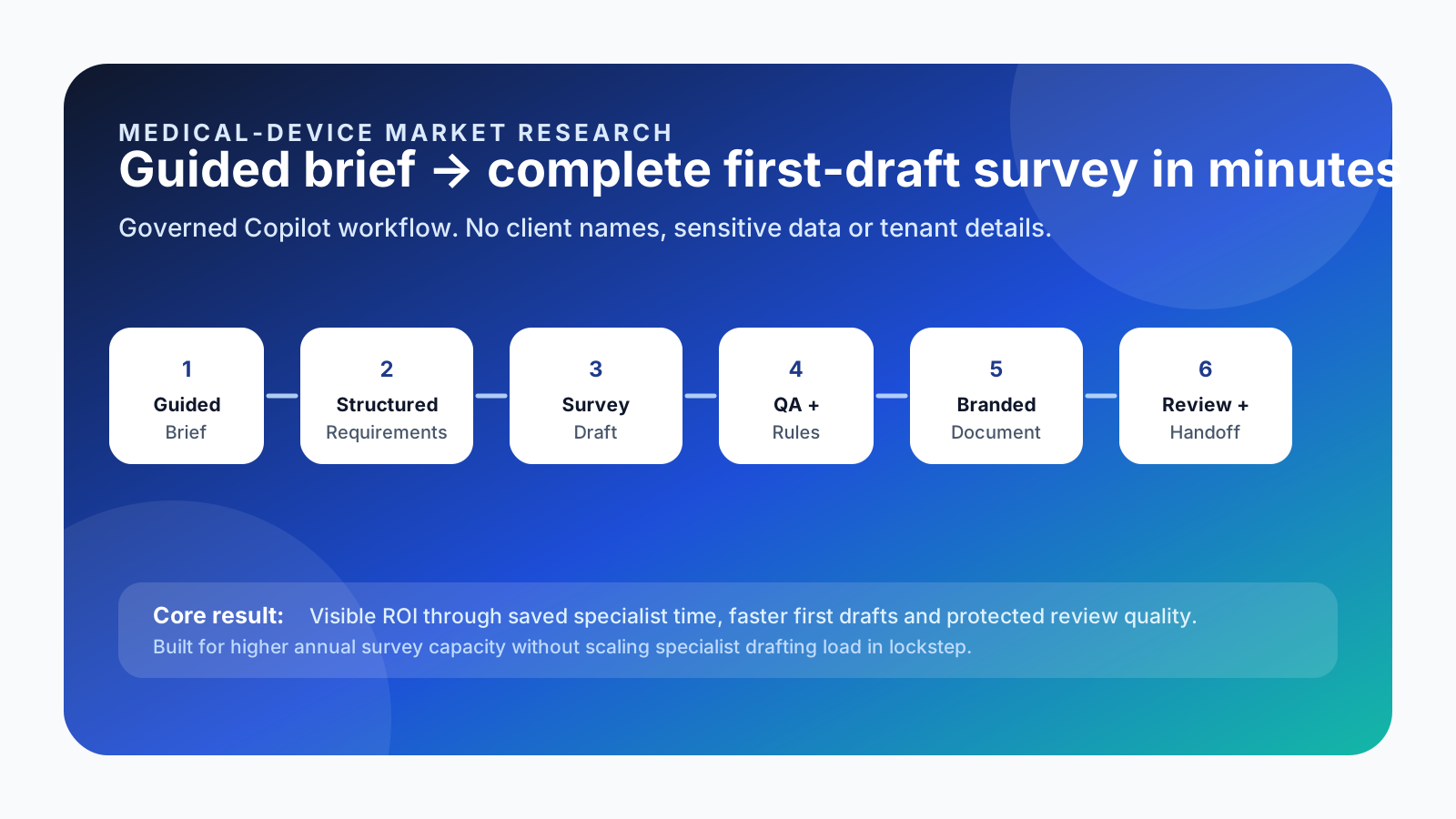
A public-safe view of the Copilot operating model: guided intake, reusable rules, first-draft generation, QA and specialist review.
The issue was not imagination. It was repeat specialist work: collecting the right research context, building survey sections, hitting the requested length, following formatting rules, and leaving reviewers with something they could actually use. Before implementation, one survey could take around four hours to create and format. Since the Copilot workflow went in, the first-draft step can happen in about two to three minutes. Specialists still review the work, but they are no longer starting from a blank page every time.
Research briefs arrive with nuance. The workflow collects and structures that context so Copilot can produce a complete first draft in minutes.
The draft needed to follow survey conventions, hit the requested length and be readable for the people responsible for review and next-step setup.
Knowledge and formatting updates needed review, not silent edits that changed how the agent behaved without oversight.
visible before-and-now drafting benchmark for one survey
drafting-time reduction since implementation, before expert review
costed drafting effort avoided per survey at the old rate
survey capacity future-proofed without matching specialist headcount growth
The numbers make the case without dressing it up. Before: about four hours to create and format one survey, with a cited creation cost of roughly $1,000. Now: a guided Copilot workflow can take the same kind of brief and produce a structured first draft in around two to three minutes. Using the midpoint, that is about a 99% reduction in drafting time and roughly $990 of costed drafting effort avoided per survey before specialist review.
creation and formatting effort for one survey before the governed Copilot workflow
guided intake to structured Copilot draft, ready for expert review
about $990 of costed drafting effort avoided per survey at the old rate
more survey volume can be handled without adding specialist drafting load at the same rate
A specialist had to turn a research brief into a full survey structure, then format it into a usable client document.
A guided Copilot intake captures the objective, audience, market, topic area, length and constraints before drafting starts.
Less expert time is spent reconstructing the brief or fixing avoidable structure problems.
About four hours of creation and formatting effort for one survey, costed at roughly $1,000.
A structured first draft can be produced in about two to three minutes, then passed to expert review.
Roughly 99% faster drafting and around $990 of costed drafting effort avoided per survey at the old rate.
A 12-person specialist team could support up to 200 survey projects a year, but higher volume meant more drafting pressure.
Repeat drafting work is compressed into a governed workflow while specialists keep final judgement and client responsibility.
The workflow creates room to support more than 200 surveys a year without adding specialist drafting load in the same proportion.
Pattrn Data brought the Copilot expertise: Copilot Studio design, prompt-component architecture, approved knowledge, formatting rules, document-rendering logic and practical runbooks. The point was not to let AI run loose. It was to give the team a governed Copilot workflow that could take a brief, produce a strong first draft and leave the specialist judgement exactly where it belongs.
The agent collects the study objective, respondent audience, market context, topic area, required survey length, output requirements and constraints before it starts drafting.
Messy instructions are converted into a clearer generation brief so the later steps are working from organised context, not guesswork.
Separate prompt components handle demographics, screener logic, main survey sections, question types, required length and shared writing rules so the output arrives as a complete survey draft, not fragments.
The workflow checks structure and follows approved document rules so reviewers are not left cleaning up raw AI output.
Structured output can be rendered into a client-readable document and prepared for the team’s downstream survey process.
Knowledge and formatting updates are treated as reviewed changes, not silent edits hidden inside one giant prompt.
Repeat expert-document workflows usually fail at the same places: intake, context, formatting, review and handoff.
Copilot only becomes useful operationally when the rules, knowledge and review points are designed around the team’s real workflow.
The value is not just a faster first draft. It is more capacity with the same specialist judgement still in charge.
The same pattern applies to proposals, reports, assessments, client packs and other repeat expert documents. The opportunity is not to remove judgement. It is to compress repeat drafting into a guided, reviewable workflow, then make the result clearer, easier to govern and easier to hand into the next system.
Start with the handoff: what system, person or client receives the output next?
Users no longer need to remember perfect prompt wording. The workflow guides the intake instead.
Separate generation, formatting, review and maintenance so each part can be improved safely.
Keep humans in the judgement points when work is specialist, sensitive or client-facing.
Pattrn Data can map the intake, knowledge, rules, review points, output format and maintenance model so repeat document work moves from slow manual drafting to governed Copilot output.