
6 Stages to Govern Case Management Workflows for Professional Services
Short answer
A quick answer first, then the fuller context below.
Governance first guide for professional services to map, pilot, and govern case management workflows so teams can safely use automation and AI.
A case management workflow is the operational lifecycle a piece of work follows from intake to closure, built for tasks that need human judgement rather than a fixed sequence of steps. Choose case management when work is unpredictable and decision-heavy; choose a workflow or BPM approach, modelled on the BPMN 2.0 standard, when the task is repeatable and structured. Getting this distinction right, using a framework like the Pattrn Protocol, is what stops firms bolting AI onto the wrong kind of process.
TL;DR:
- Case management workflows are suited for unstructured, judgment-heavy work where evidence and circumstances evolve unpredictably, unlike fixed-sequence workflows for repetitive tasks.
- Successful implementation requires mapping existing processes, defining case types, assigning clear roles, and setting measurable success criteria before selecting any tools.
- Automation should focus on status updates and routing, while complex decision-making remains a human responsibility, with AI assisting only in non-critical, explainable tasks.
- Rigorous governance is essential to prevent staff workarounds and unauthorized decisions, including human review gates, audit trails, and defined data boundaries.
- Starting with small pilots that include human review checkpoints and measuring impact on admin burden helps ensure safe, effective automation scaling.
Table of Contents
- What is a case management workflow?
- Case management vs workflow management vs BPM: which one do you actually need?
- Stages in detail: what happens, who does it, and what you need on hand
- How to design a case management workflow for your organisation
- Tooling, automation and AI: what to trust and what to keep human
- Where case management workflows usually break, and how to govern them
- Perspective: what actually matters when you design this
- How Pattrn Data can help you build this safely
- Sources
- FAQ
What is a case management workflow?
A case, in this sense, is not a task. It is an evolving unit of work that accumulates evidence, decisions and documents over time, some of it structured (dates, statuses, form fields) and some of it not (emails, notes, supporting documents, a client’s changing circumstances). A case management workflow is the operational structure that holds that evidence together and moves it towards a decision.
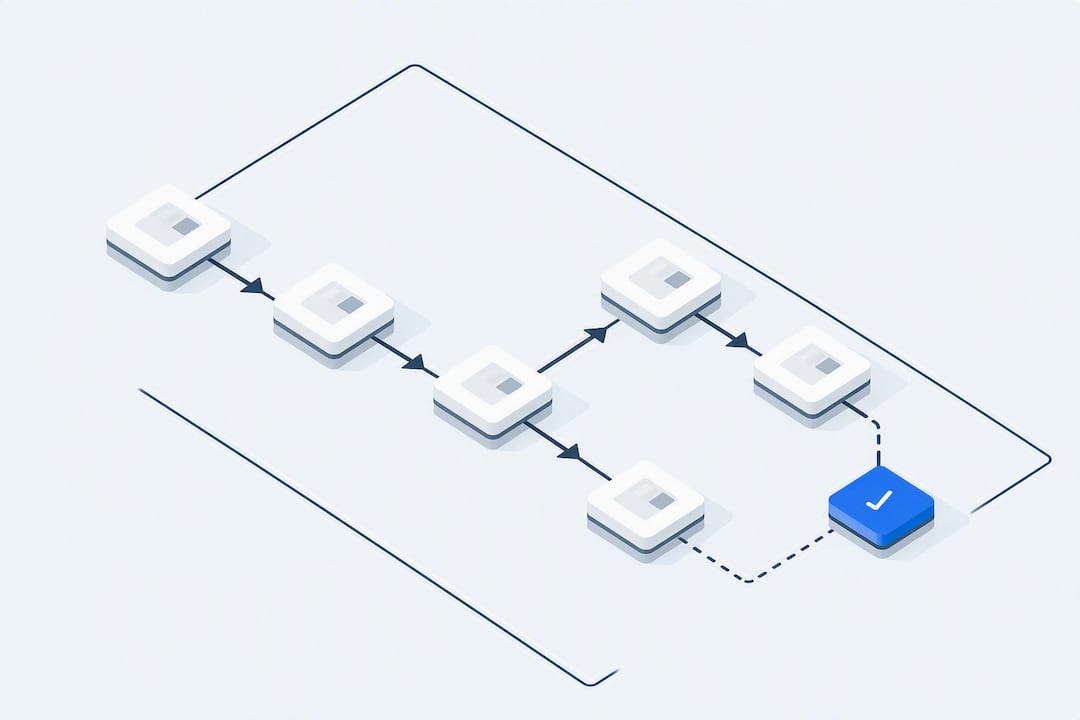
That is the core answer to “what is case management”: it is the discipline of managing evolving, judgement-led work items through a repeatable lifecycle, not a single fixed script. Most practical guides converge on a similar shape for that lifecycle:
- Intake — the case is opened, basic facts are captured, and it is screened for urgency and type.
- Assessment — evidence is gathered, risk is weighed, and the real scope of the problem is understood.
- Planning — goals, tasks, owners and deadlines are set out, usually with the client involved.
- Implementation — the plan is actioned: tasks are routed, work is done, communications go out.
- Monitoring — progress is checked against the plan, and the plan is revised when circumstances change.
- Closure — the case is formally ended, documented, and handed off or archived.
In practice, cases rarely move through these stages in a straight line. A case can bounce from monitoring back to assessment when new evidence appears, or sit in implementation for months while circumstances shift. That is normal, not a failure of design. What does help is a reusable roadmap per case type, a template of the tasks, documents and decision points typical for that category of case, so nobody starts from a blank page each time and case handlers aren’t reinventing structure that already exists elsewhere in the firm.
Case management vs workflow management vs BPM: which one do you actually need?
The mistake most professional services firms make is picking a tool before naming the problem. A workflow platform bought to “manage cases” often fails not because the software is bad, but because the work itself was never structured enough to sit inside a fixed sequence of steps.
The practical dividing line, according to a widely cited comparison, comes down to predictability. Case management suits unstructured, dynamic work where a person has to weigh evidence and decide what happens next. Workflow management and BPM suit structured, repeatable tasks where the sequence rarely changes.
| Dimension | Case management | Workflow / BPM |
|---|---|---|
| Structure | Loose, stage-based, reversible | Fixed sequence, usually linear |
| Predictability | Low, each case differs | High, same steps every time |
| Decision driver | Human judgement on evidence | Rules and conditions |
| Data | Mixed: documents, notes, evidence | Mostly structured fields |
| Tooling fit | Case management platform, flexible routing | Workflow engine, BPMN diagrams, orchestration tools |
An investigative insurance claim is a case management problem: the facts are incomplete at intake, the investigator has to decide what evidence matters, and the path to resolution varies enormously between claims. Invoice processing is a workflow problem: the same fields arrive in roughly the same order, the approval chain is fixed, and a tool like Apache Airflow, built for scheduled, deterministic pipelines, is a better fit than a case platform built for judgement calls.
The rule of thumb: if two experienced staff could look at the same starting information and reasonably plan different next steps, you have a case. If they would both do the same thing in the same order, you have a workflow.
Stages in detail: what happens, who does it, and what you need on hand
Each stage of the case management workflow has its own minimum requirements, and skipping them is where most breakdowns start.
- Intake and screening. Use a short triage rubric, three or four questions that sort urgency and type, so every case starts with the same minimum dataset: who raised it, what’s being asked, and any immediate risk flags. Weak intake is the single most common cause of cases stalling later, because nobody captured the detail that would have changed the plan.
- Assessment. This is where evidence gets collected and risk gets weighed properly. Set clear referral rules here: at what point does a case get escalated to a senior adviser, compliance officer or specialist? Vague referral criteria mean risky cases sit with junior staff for too long.
- Planning. The plan should be co-created with the client or stakeholder wherever possible, and it needs four things written down: goals, specific tasks, deadlines and named owners. A plan without an owner per task is not a plan, it’s a wish list.
- Implementation. Tasks get routed to the right person or team, handoffs happen, and progress gets tracked against the plan. This is the stage where dropped handoffs cause most reputational damage, particularly in legal case management, where a missed deadline can have direct consequences for a client.
- Monitoring and reassessment. Set explicit triggers for revisiting the plan, a missed deadline, new evidence, a change in the client’s situation, rather than relying on someone remembering to check. Useful KPIs here include average time-in-stage and the proportion of cases reopened after an apparent close.
- Closure and transition. Closure needs a short handoff checklist: outstanding actions confirmed complete, documentation filed, and a brief note on what worked or didn’t for future cases of that type.
Pro Tip: Build the intake rubric and the closure checklist before you build anything else. They are cheap to design and they catch the two moments where most cases either start badly or end messily.
How to design a case management workflow for your organisation
Designing a workflow properly means resisting the urge to buy software first. Map, design, pilot, then iterate, in that order.
- Map current flows before touching any tool. Sit with the people actually handling cases and trace where decisions get made, where work stalls, and where information gets lost between systems or people.
- Define your case types. Most firms have three to six recurring categories of case. Build a reusable roadmap for each, templated tasks and typical documents reduce the chance of dropped work and speed up onboarding for new staff.
- Assign roles by function, not by person. “Whoever picks it up first” is not a role. Define who screens, who assesses, who approves escalations, and write clear rules for when a case moves up a level.
- Set measurable success criteria and service-level agreements. Decide what “on track” looks like for each case type before you launch, not after.
- Design your audit log and data boundaries at the same time as the process, not as an afterthought once something goes wrong.
- Pilot with a narrow cohort. Pick one case type, a small group of handlers, and run it for a fixed period before rolling out further.
A few things worth checking before that pilot goes live: pilot and scale workflows that sell to ensure success with CRM workflow automation, as explained in detail by Smarter Business.
- Does every stage have a named owner and a maximum time-in-stage?
- Is there a single source of truth for case status, rather than three spreadsheets and an inbox?
- Can you produce an audit trail of who did what, and when, for any given case?
- Have you separated what a member of staff will decide from what a checklist or system will merely suggest?
Running this design process against a structured framework, the Pattrn Protocol checklist, for instance, forces the data boundary and review-gate questions to get answered before launch rather than during a post-incident review.
Tooling, automation and AI: what to trust and what to keep human
Not all automation in a case management workflow does the same job, and treating it as one category is where firms get into trouble.
Status-based routing, moving a case to “pending review” once a form is submitted, is simple and low-risk. Content-based routing, deciding what a case actually needs based on the substance of a document or message, is much harder, because it needs natural language processing and quality checks that most off-the-shelf setups don’t have out of the box.
When evaluating a platform, prioritise features in roughly this order:
- A complete audit trail showing every action, actor and timestamp.
- Role-based access control, so people only see and edit what their role permits.
- Document linking that keeps evidence attached to the case rather than scattered across email and shared drives.
- Re-date cascades, so changing one deadline correctly shifts dependent deadlines rather than leaving them orphaned.
- Integration points for SSO/IAM, so access control ties into your existing identity systems rather than sitting outside them.
AI genuinely helps with summarisation, triage suggestions, drafting first-pass text, and pulling structured facts out of unstructured documents, work that speeds up a person’s judgement rather than replacing it. It should not make final decisions unsupervised, close a case automatically, or take an action with legal or financial consequence without a human sign-off. Case management platforms with these features tend to separate the two cleanly: automation for routing and reminders, human review for anything that changes an outcome.
Pro Tip: If you can’t explain in one sentence why an AI suggestion was made, don’t let it act unsupervised. Explainability is the cheapest safeguard you have, and it costs nothing to insist on it from day one.

Where case management workflows usually break, and how to govern them
Most failures in case management workflows come from one root cause: forcing judgement-heavy work into a rigid system built for repeatable tasks. When that happens, staff either work around the system in spreadsheets and inboxes, which is exactly the scattered-record problem the workflow was meant to fix, or the system makes routing decisions that don’t reflect the actual complexity of the case.
The fix is not more automation. It’s tighter governance around the automation you already have. A workable checklist covers:
- Human review gates at every point where a decision has real consequence for a client or the firm.
- Clear data boundaries: what information an AI tool can see, and what it must never touch.
- A full audit trail for every case action, not just the automated ones.
- Approval-led steps for anything irreversible, closure, disbursement, formal advice.
- A fixed pilot scope with a defined end date and review point, rather than an open-ended rollout.
Firms that separate routine automation from judgement-led activity, and build governance around that separation, tend to avoid the worst failure mode: an automated system quietly making decisions nobody actually approved. A narrow pilot that measures both outcome quality and the administrative drag it removes, rather than throughput alone, gives a much more honest read on whether a pilot is ready to scale.
Perspective: what actually matters when you design this
The technical distinction between case management and workflow matters less than most guides suggest. What matters is protecting judgement. Map one case type properly, run a small pilot with human review gates built in, and measure follow-up rates and time-to-resolution before anything else. Done well, automation removes admin drag without replacing the expertise that makes the decision worth trusting.
— Rohit
How Pattrn Data can help you build this safely
Pattrn Data is the practical alternative to guessing your way through a case management overhaul: instead of buying a platform and hoping the process fits, we map how cases actually move through your firm first, then design the roles, data boundaries and audit trails around that reality. Our services include AI clarity sessions, efficiency audits, Microsoft Copilot and Copilot Studio workflow design, implementation projects and ongoing governance retainers for firms that want a Chief AI Officer function without hiring one.

A typical starting engagement is a small pilot on one case type, run against a governance checklist covering data boundaries, human review gates and audit logging, so you can see the effect on administrative drag before committing to a wider rollout. If you handle document-heavy, judgement-led case work and want a clear view of where automation genuinely helps and where it should stay firmly out of the decision, book an AI audit and get a straight answer on what a safe pilot for your firm would look like.
Sources
Recommended
Frequently asked questions
What are the 7 steps of case management?
Definitions vary by industry, but most models compress to six core stages: intake, assessment, planning, implementation, monitoring and closure, sometimes with a separate screening step ahead of intake making it seven.
What are the five steps of workflow management?
A common workflow model runs: design, model, execute, monitor and optimise, reflecting the linear, repeatable nature of workflow tasks compared with the reversible stages of case management.
What is a case management process?
It’s the structured lifecycle a case moves through, from intake to closure, that lets a person collect evidence, plan a response and track progress on work that can’t be reduced to a fixed script.
How is case management different from workflow management?
Case management handles unpredictable, judgement-driven work where each instance differs, while workflow management handles structured, repeatable tasks with a fixed sequence.
Can AI safely be used in a case management workflow?
Yes, for summarisation, triage suggestions and drafting, provided decisions with real consequences stay with a human reviewer and every AI-assisted step is logged in an auditable trail .
Choosing AI tools for your practice?
Book a free 30-minute discovery call to talk through the risks and options with Rohit. Use the deeper service links only when you already know the decision needs audit, governance or implementation support.
AI workflow automation
Turn repeatable admin, client service and reporting work into controlled workflows with clear human review points.
AI workflow automation supportAI governance consulting
Create policies, approval routes, ownership and controls that teams can actually use day to day.
AI governance consultingPricing and next-step routes
Compare clarity sessions, audits, implementation projects, recovery work and governance retainers by the decision you need to make next.
compare the next-step options